Doctor Review: “Remote Examination Can Be Clinically Diagnostic”
Physician Juuso Juuri tested the Omply platform during a clinical visit and reviewed his experience for us.
How does a remote clinical examination work in practice when it goes beyond a simple video call? Physician Juuso Juuri tested the Omply platform during a clinical visit and reviewed his experience for us.
First Impressions of the Omply’s Remote Examination Platform
I participated in a test appointment using the Omply remote examination platform, and the overall experience was more positive than expected. Logging into the system was straightforward. The doctor interface was very clear, with intuitive and easy-to-use functions. Thanks to its visual simplicity and logical structure, the platform could be learned in practice within seconds, without the need for a prior training.
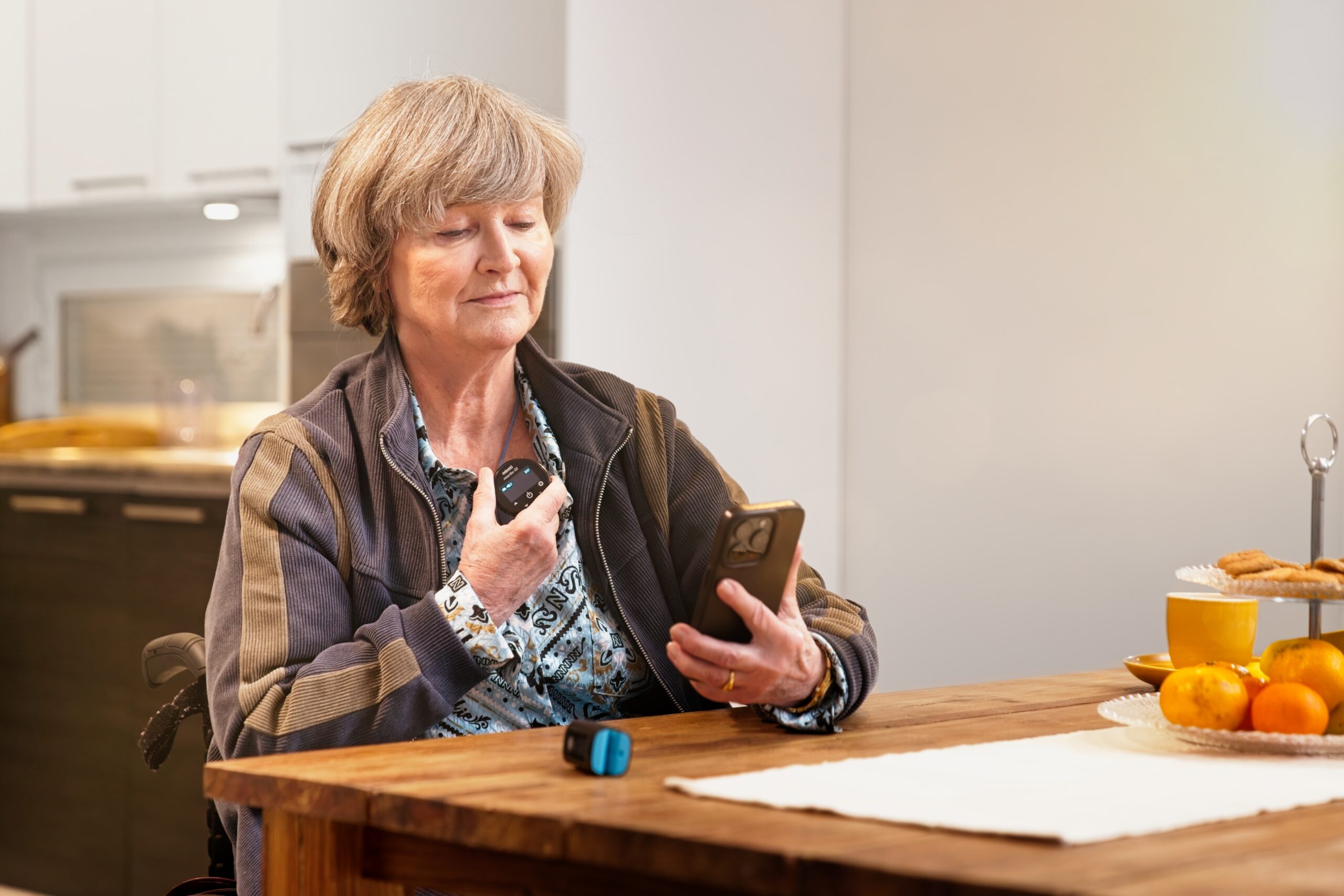
Measurement of vital signs (SpO₂, heart rate, blood pressure, and temperature) was smooth and fast. The data updated clearly and without delay. Real-time availability allowed the appointment to proceed at the same pace as a conventional in-person visit would.
The stethoscope performed well overall. Audio quality was clean and the frequency response sufficient for clinical use. Heart and lung sounds were clearly distinguishable when the patient held the device steadily. The sensor was sensitive enough that minor finger movements occasionally affected auscultation, but this was easily resolved with brief patient guidance.
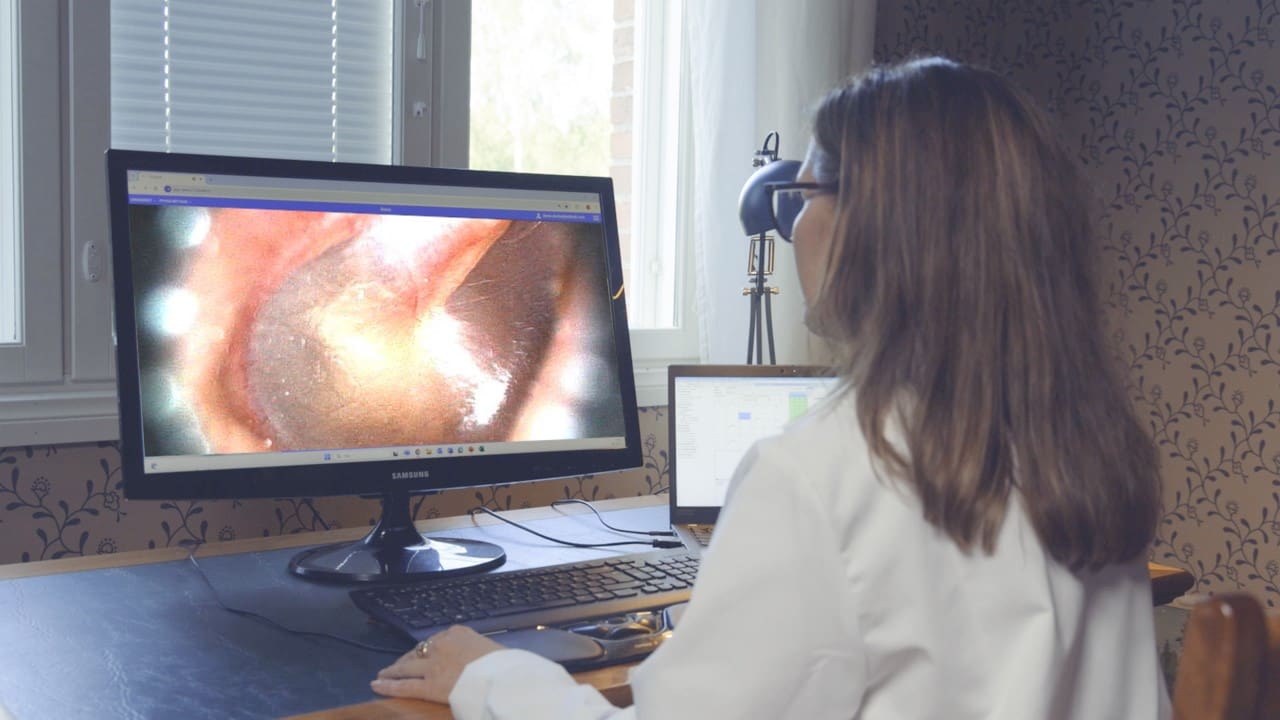
The otoscope view was particularly impressive. The tympanic membrane was visualized clearly across its full surface and in good detail. Examination of the ear canal and Valsalva response was also straightforward with simple patient instructions. Overall, the experience was, in my opinion, even better than with a traditional otoscope, and the examination itself was very fast. The otoscope was also suitable for assessing skin lesions, providing a highly detailed view.
Examination of the oral cavity and pharynx with the camera was in some ways easier than during an in-person visit. The camera provided optimal illumination, and the entire pharynx could be visualized in a single view without the need for repositioning or continuous camera movement.
Camera performance was essentially latency-free, despite a relatively limited internet connection (approximately 13 Mbps). The image remained mostly stable, with natural color reproduction. Some loss of clarity occurred when the otoscope was moved, but the image stabilized once the device was held still. I would estimate that a connection speed of at least 20–40 Mbps on the physician’s side would allow the otoscopic image to reach its full potential.
Overall, my initial impression is that the platform enables inspection and auscultation that closely approach the quality of clinical examination performed during an in-person visit—and in some cases may even exceed it. Based on this test, the technology supports genuine remote examination that meaningfully informs diagnostic decision-making and reduces the need for unnecessary follow-up visits.
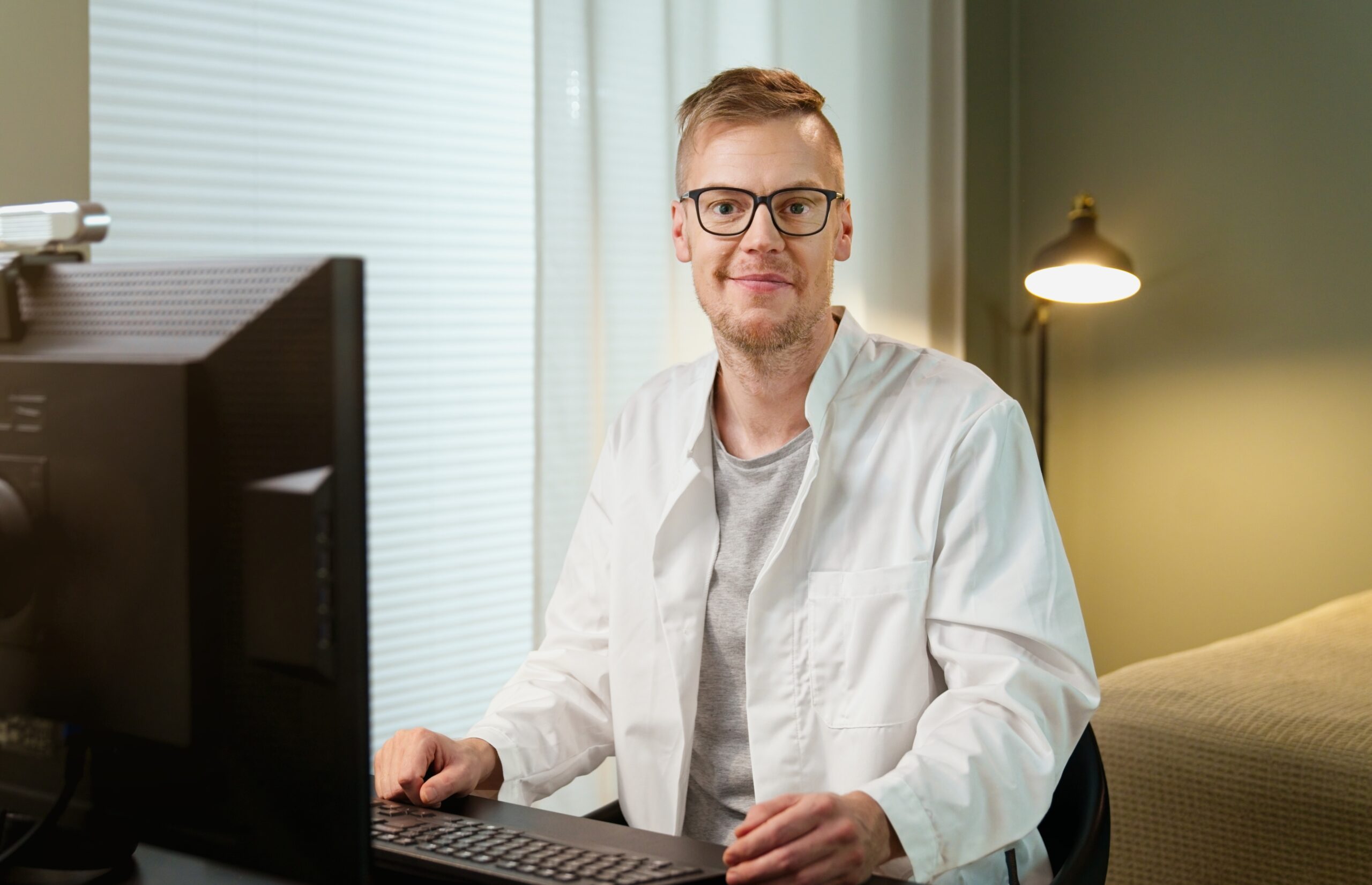
Juuso Juuri, MD
“The quality of clinical examination performed during an in-person visit—and in some cases may even exceed it.”
– Juuso Juuri, MD
Healthcare doesn’t have to tie you to a place or a schedule.
Omply brings the doctor’s examination to where life happens. Discover how remote examination can make your everyday life easier.
Read next
More stories and updates you might find interesting.